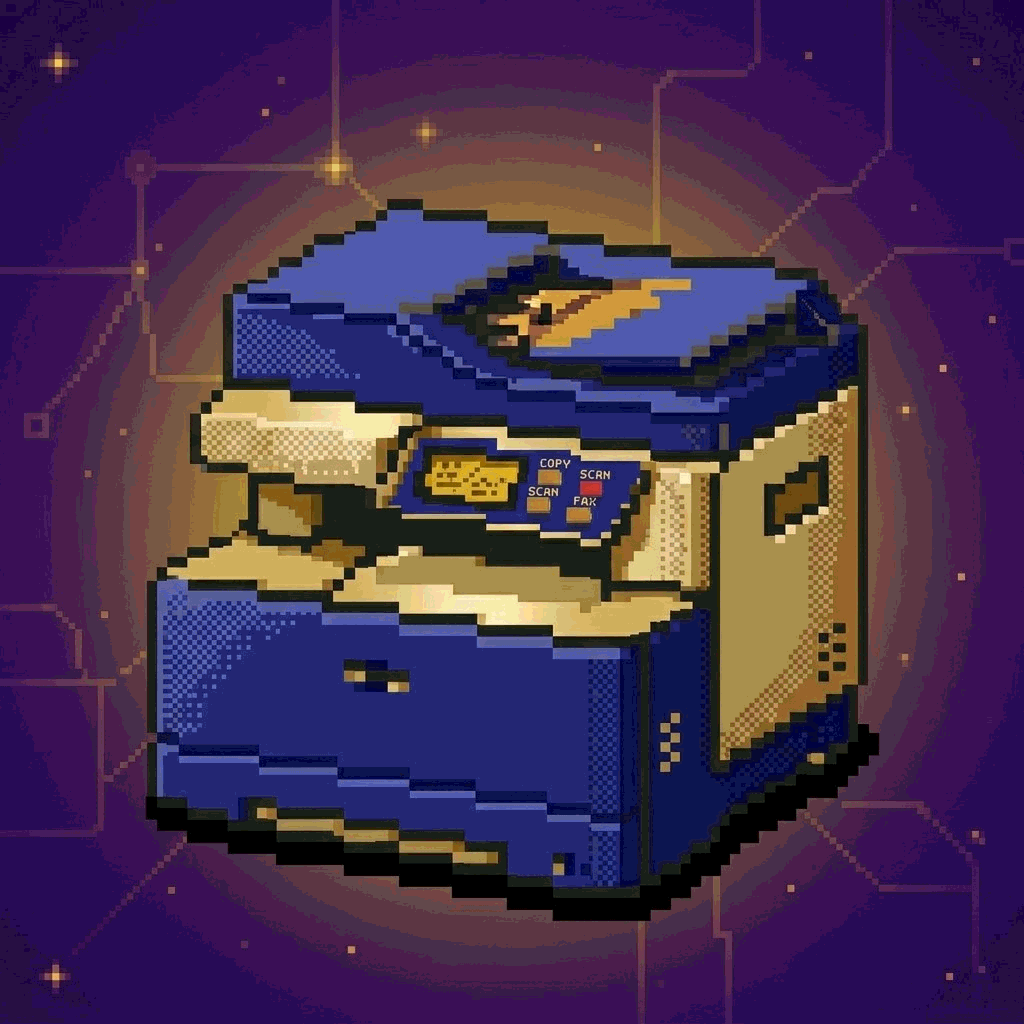
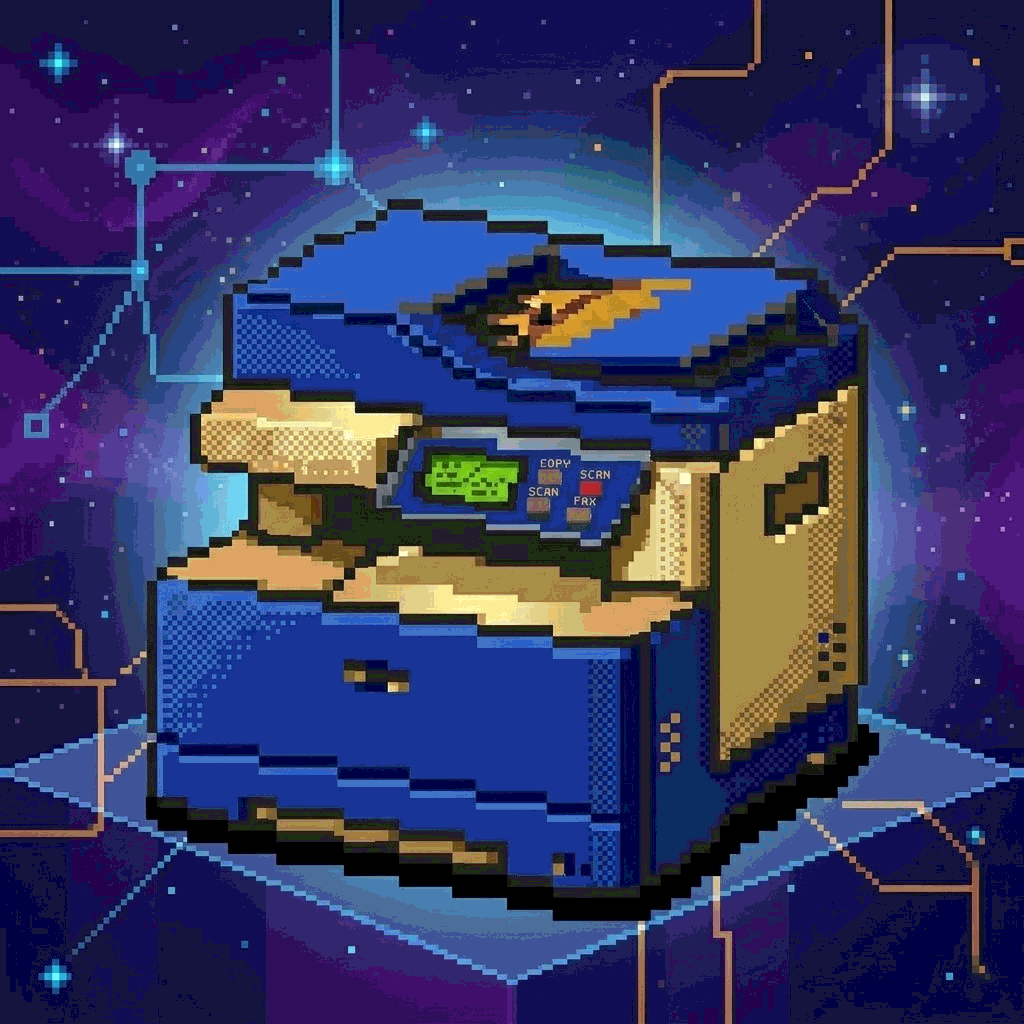
printer.exe

Burn the token. Roll for the print.

Burn PRINTER for attempts at one of 4,000 printers. Losing attempts are banked and raise your odds. Attempt 200 is a guaranteed print, and a win resets the counter to zero.

Printers minted of 4,000
PRINTER burned to the dead address
Tokenized stock paid to holders

Open the mint 1,000 PRINTER per attempt, plus a small ETH mint fee per printer. Unused fee is refunded.

Ready4,000 total supply
How it works
  1. 1

    Launch on Pons

    The token is minted and launched on Pons, paired against ETH so the ecosystem starts with real depth from day one.

  2. 2

    Burn to start

    Each attempt burns 1,000 tokens and buys one shot at starting the machine. An attempt is not a print. It is a try at getting the machine running. When it fires up, you mint your printer. The small ETH mint fee lands only when the machine runs, never on an attempt that fails.

  3. 3

    Odds climb

    A losing attempt is banked. Your odds are your banked attempts squared over 40,000, so 200 attempts print a guaranteed machine. A win resets the counter to zero.

  4. 4

    Holders get paid

    All ETH the token pair earns is swapped into tokenized stock and split equally across every printer. A different stock each round: NVDA, GOOGL, AAPL, SPCX.

Chance per attemptattempt n = n squared / 40,000

10 = 0.25%100 = 25%200 = 100%

Attempts 10 to 200 shown in steps of 10Cap 200
Mint

MINT OPENS SOON

minted of complete


Attempts

Request summary

PRINTER to burn
ETH mint fee, per printer
ETH deposit, refunded on reveal
Chance of at least one win
Maximum printers this request

The mint fee is charged per printer, not per attempt. The deposit is min(attempts, 10) × the mint fee. Anything unused comes back.


1,000 PRINTER per attemptMax 10 attempts per requestReveal delay 1 block
Holder rewards

Trading fees become stock

Trading fees are collected in ETH, swapped into a tokenized stock, and split evenly across every printer. Each round uses a different stock. The rotation is:

  • NVDA
  • GOOGL
  • AAPL
  • SPCX

Paid per printer, evenlyOne stock per round
Roadmap
  • LEG 1 · TOKEN LAUNCH — Deployment on Robinhood Chain and the ETH-paired pool goes live on Pons. (in progress)

  • LEG 2 · MINT OPENS — Burn-to-roll terminal unlocks on this site. 1,000 tokens per attempt, odds rising with every roll. (next)

  • LEG 3 · FIRST DISTRIBUTION — First vault round opens. A tokenized stock splits equally across every printer, claimable on chain. (queued)

  • LEG 4 · ORBIT — Marketplace listings and the next chapter of the collection. (queued)

Nothing shipped yetNo dates committed
Help

Frequently asked questions

WHAT IS PRINTER.EXE?

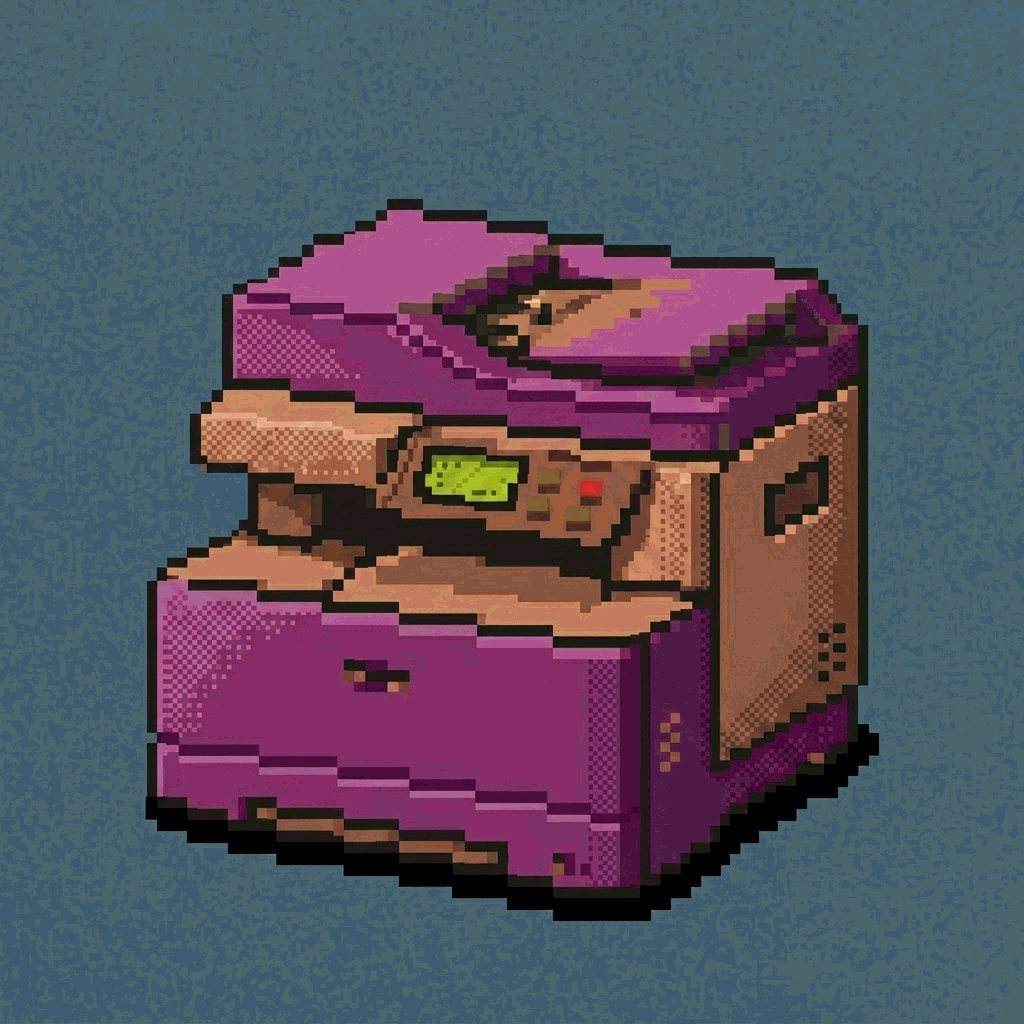
printer.exe is a 4,000-piece pixel-art NFT collection on Robin Hood Chain.

The collection is tied to a token. $PRINTER launches on Pons, paired against ETH. You do not buy an NFT with money. You burn tokens to buy a roll of the dice. Each attempt burns 1,000 PRINTER, and burned tokens leave circulation for good. Every losing attempt raises the odds on the next one. Attempt 200 is a guaranteed print.

The mint fee is charged per printer you print, not per attempt. Nobody knows in advance how many printers a batch will produce, so the burn holds a deposit for the maximum it could produce. At the reveal, the contract charges only for the printers you actually got. The rest returns to your wallet in that same transaction. This fee pays the gas for reward distributions. Network gas is separate: it goes to the chain, not to us.

The real story starts after the mint. Every trade in the token pool produces a fee. That fee flows into our vault contract. The vault swaps it into tokenized stock. Then it splits that stock equally across every printer.

So each printer pays out like a stock dividend. You are not paid in dollars or in our own token. You are paid in real tokenized stock. The more the pool trades, the more stock each holder gets.

HOW DO I MINT?

You do not buy a print. You buy attempts. Pick how many attempts you want, approve the contract to spend your tokens, then send the burn. One block later you press REVEAL and the contract draws your result. Approve, burn and reveal are three separate transactions, and the burn and the reveal cannot sit in the same block.

WHY TWO TRANSACTIONS?

The draw needs a random seed nobody can see in advance. The contract takes it from the hash of your burn block, which does not exist yet when you burn. If the whole draw ran in one transaction, an attacker could wrap it in a contract, revert every losing roll and retry for free. Splitting it in two makes that impossible.

WHAT ARE MY ODDS?

Your odds are n squared over 40,000, where n is the number of attempts banked on your wallet. Attempt 1 is 1 in 40,000. Attempt 50 is 6.25%. Attempt 200 is a guaranteed print, so 200,000 tokens buys a machine no matter how the dice fall. The average cost is 43,746 tokens and half of all wallets print within 43 attempts. Winning resets your counter to zero and the next machine starts the curve again.

IS THERE AN ETH FEE?

Yes, and it is charged per printed NFT, not per attempt. Because nobody knows how many prints an attempt batch will produce, the burn takes a deposit: min(attempts, 10) multiplied by the mint fee. The reveal charges only for the prints you actually got and refunds the rest in the same transaction. That fee funds the gas for reward distributions. Network gas is separate and goes to the chain, not to us.

WHAT IF I DO NOT REVEAL IN TIME?

You lose the draw. The chain only keeps the last 256 block hashes, so the reveal window is 250 blocks after your burn. Miss it and the contract still runs: your tokens are burned, your attempt counter still moves up, your full ETH deposit comes back, but no NFT is drawn. This rule is strict on purpose. A softer rule would let people see a bad outcome and simply wait for a free reroll. Reveal as soon as the button turns on.

WHERE DO MY TOKENS GO?

The contract holds them while your roll is pending, then sends them at reveal to the dead address 0x000000000000000000000000000000000000dEaD. The Pons V2 launch token carries no burn function, so the total supply number does not drop. The tokens still leave circulation for good: nobody, including us, can ever move them again. This happens whether you print or not.

HOW ARE REWARDS PAID?

The vault contract collects the ETH earned by the token pair. A keeper sweeps that ETH, swaps it for one tokenized stock, and opens it as a round. The stock rotates each round: NVDA, GOOGL, AAPL, SPCX. Every printer minted at the time the round opens gets an equal share. Payouts are claimable, not pushed: you call claim on the vault and the stock tokens land in your wallet. Your share waits for you until you take it.

HOW MANY PRINTERS ARE THERE?

Exactly 4,000. MAX_SUPPLY is a constant baked into the bytecode, so nobody, including the owner, can raise it. A single roll can print at most 10 machines, and the contract stops drawing once that cap is hit and refunds the tokens for the attempts it did not use.

CAN I MINT ANYWHERE ELSE?

No. This site is the only mint interface. Any other contract, link or marketplace listing claiming to mint printer.exe is a fake.

WHAT IF MY REFUND FAILS?

The contract sends ETH refunds with a 30,000 gas limit so a hostile receiving contract cannot stall the reveal. If that transfer fails, the amount is written to a ledger under your address and a CLAIM REFUND button appears in the terminal. Nothing is lost and the money waits until you take it.

WHAT IF I SELL MY NFT?

Rewards follow the NFT, not the wallet. The claim right sits on the token ID, so whoever holds the printer when you call claim collects the payout. Claim your open rounds before you sell, or the buyer takes them.

CAN THE TEAM TAKE THE VAULT MONEY?

Not for a long time, and not quietly. Each round has a 12-month claim window written into the contract as a constant. Only after those 12 months pass can the owner sweep what is still unclaimed from that one round. The owner cannot shorten the window, cannot touch a round early, and cannot pull funds that are already claimed. There is no general rescue function.
WHAT IS PRINTER.EXE?

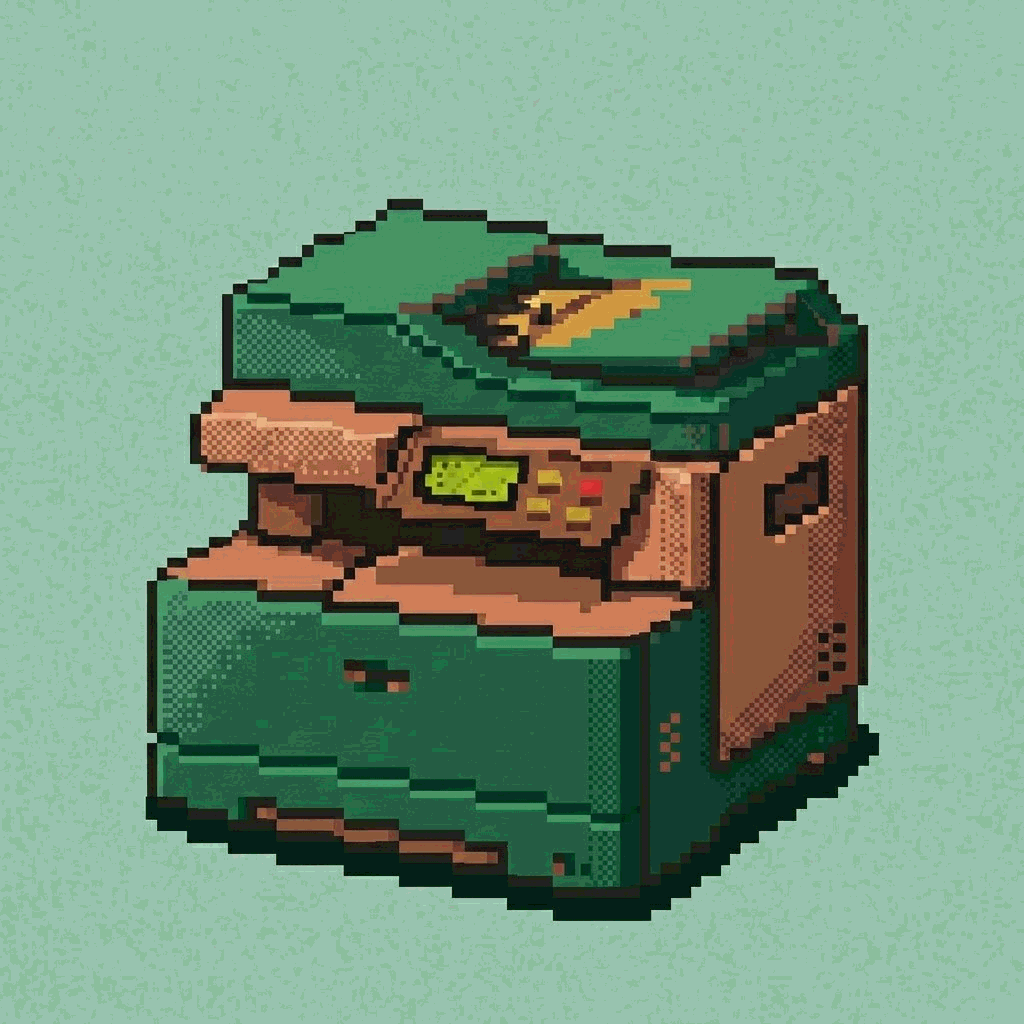
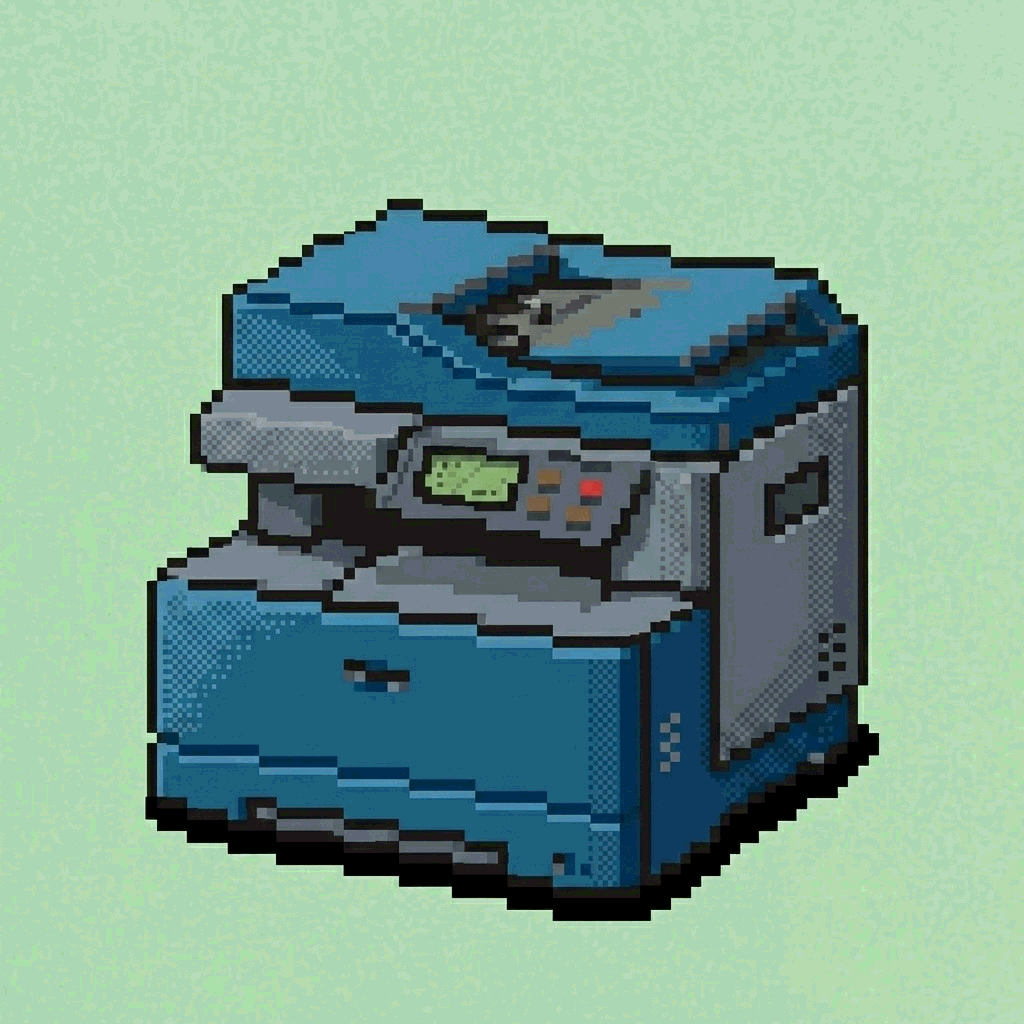
printer.exe is a 4,000-piece pixel-art NFT collection on Robin Hood Chain.

The collection is tied to a token. $PRINTER launches on Pons, paired against ETH. You do not buy an NFT with money. You burn tokens to buy a roll of the dice. Each attempt burns 1,000 PRINTER, and burned tokens leave circulation for good. Every losing attempt raises the odds on the next one. Attempt 200 is a guaranteed print.

The mint fee is charged per printer you print, not per attempt. Nobody knows in advance how many printers a batch will produce, so the burn holds a deposit for the maximum it could produce. At the reveal, the contract charges only for the printers you actually got. The rest returns to your wallet in that same transaction. This fee pays the gas for reward distributions. Network gas is separate: it goes to the chain, not to us.

The real story starts after the mint. Every trade in the token pool produces a fee. That fee flows into our vault contract. The vault swaps it into tokenized stock. Then it splits that stock equally across every printer.

So each printer pays out like a stock dividend. You are not paid in dollars or in our own token. You are paid in real tokenized stock. The more the pool trades, the more stock each holder gets.

HOW DO I MINT?

You do not buy a print. You buy attempts. Pick how many attempts you want, approve the contract to spend your tokens, then send the burn. One block later you press REVEAL and the contract draws your result. Approve, burn and reveal are three separate transactions, and the burn and the reveal cannot sit in the same block.

WHY TWO TRANSACTIONS?

The draw needs a random seed nobody can see in advance. The contract takes it from the hash of your burn block, which does not exist yet when you burn. If the whole draw ran in one transaction, an attacker could wrap it in a contract, revert every losing roll and retry for free. Splitting it in two makes that impossible.

WHAT ARE MY ODDS?

Your odds are n squared over 40,000, where n is the number of attempts banked on your wallet. Attempt 1 is 1 in 40,000. Attempt 50 is 6.25%. Attempt 200 is a guaranteed print, so 200,000 tokens buys a machine no matter how the dice fall. The average cost is 43,746 tokens and half of all wallets print within 43 attempts. Winning resets your counter to zero and the next machine starts the curve again.

IS THERE AN ETH FEE?

Yes, and it is charged per printed NFT, not per attempt. Because nobody knows how many prints an attempt batch will produce, the burn takes a deposit: min(attempts, 10) multiplied by the mint fee. The reveal charges only for the prints you actually got and refunds the rest in the same transaction. That fee funds the gas for reward distributions. Network gas is separate and goes to the chain, not to us.

WHAT IF I DO NOT REVEAL IN TIME?

You lose the draw. The chain only keeps the last 256 block hashes, so the reveal window is 250 blocks after your burn. Miss it and the contract still runs: your tokens are burned, your attempt counter still moves up, your full ETH deposit comes back, but no NFT is drawn. This rule is strict on purpose. A softer rule would let people see a bad outcome and simply wait for a free reroll. Reveal as soon as the button turns on.

WHERE DO MY TOKENS GO?

The contract holds them while your roll is pending, then sends them at reveal to the dead address 0x000000000000000000000000000000000000dEaD. The Pons V2 launch token carries no burn function, so the total supply number does not drop. The tokens still leave circulation for good: nobody, including us, can ever move them again. This happens whether you print or not.

HOW ARE REWARDS PAID?

The vault contract collects the ETH earned by the token pair. A keeper sweeps that ETH, swaps it for one tokenized stock, and opens it as a round. The stock rotates each round: NVDA, GOOGL, AAPL, SPCX. Every printer minted at the time the round opens gets an equal share. Payouts are claimable, not pushed: you call claim on the vault and the stock tokens land in your wallet. Your share waits for you until you take it.

HOW MANY PRINTERS ARE THERE?

Exactly 4,000. MAX_SUPPLY is a constant baked into the bytecode, so nobody, including the owner, can raise it. A single roll can print at most 10 machines, and the contract stops drawing once that cap is hit and refunds the tokens for the attempts it did not use.

CAN I MINT ANYWHERE ELSE?

No. This site is the only mint interface. Any other contract, link or marketplace listing claiming to mint printer.exe is a fake.

WHAT IF MY REFUND FAILS?

The contract sends ETH refunds with a 30,000 gas limit so a hostile receiving contract cannot stall the reveal. If that transfer fails, the amount is written to a ledger under your address and a CLAIM REFUND button appears in the terminal. Nothing is lost and the money waits until you take it.

WHAT IF I SELL MY NFT?

Rewards follow the NFT, not the wallet. The claim right sits on the token ID, so whoever holds the printer when you call claim collects the payout. Claim your open rounds before you sell, or the buyer takes them.

CAN THE TEAM TAKE THE VAULT MONEY?

Not for a long time, and not quietly. Each round has a 12-month claim window written into the contract as a constant. Only after those 12 months pass can the owner sweep what is still unclaimed from that one round. The owner cannot shorten the window, cannot touch a round early, and cannot pull funds that are already claimed. There is no general rescue function.
13 topicsHelp and Support Center